How the ErgoKneeler™ addresses musculoskeletal stressing in kneeling
.
| The mechanics of musculoskeletal stressing in kneeling posture . |
How the ErgoKneeler™ addresses the issues |
 . |
 . |
| 1. Knee and ankle joint structures (e.g. ligaments,tendons etc) are stressed by being at the end of their range of movement, made extreme by compression forces from body weight. |  1. Supports the knees and ankles away from their end of range postion, reducing stress on joint structures. Support to ankles frees the feet to move during kneeling, promoting circulation. … |
| 2. Compression forces from body weight impede blood flow and nerve conduction in lower limbs. | 2. Supports body weight, relieving the compression forces on the joints and tissues in the lower legs and alleviating impediment of blood flow and nerve conduction. ,.. |
| 3. The spine loses its natural curves, increasing loading on the intra vertebral discs and compromising spinal structures. Static tension occurs in back muscles in order to resist the gravitational forces resulting from the non neutral (unbalanced) spinal posture. | 3. Positions the pelvis to promote natural spinal curves, reducing both static muscle tension and the stressing of spinal structures. Facilitates the user in positioning close to task, reducing the need to stoop or over reach. NB. To achieve optimum spinal posture, the task must be undertaken at around the users waist height, for example – a limb support or low stool positions a client’s leg at a suitable height for a nurse to carry out leg dressings .. |
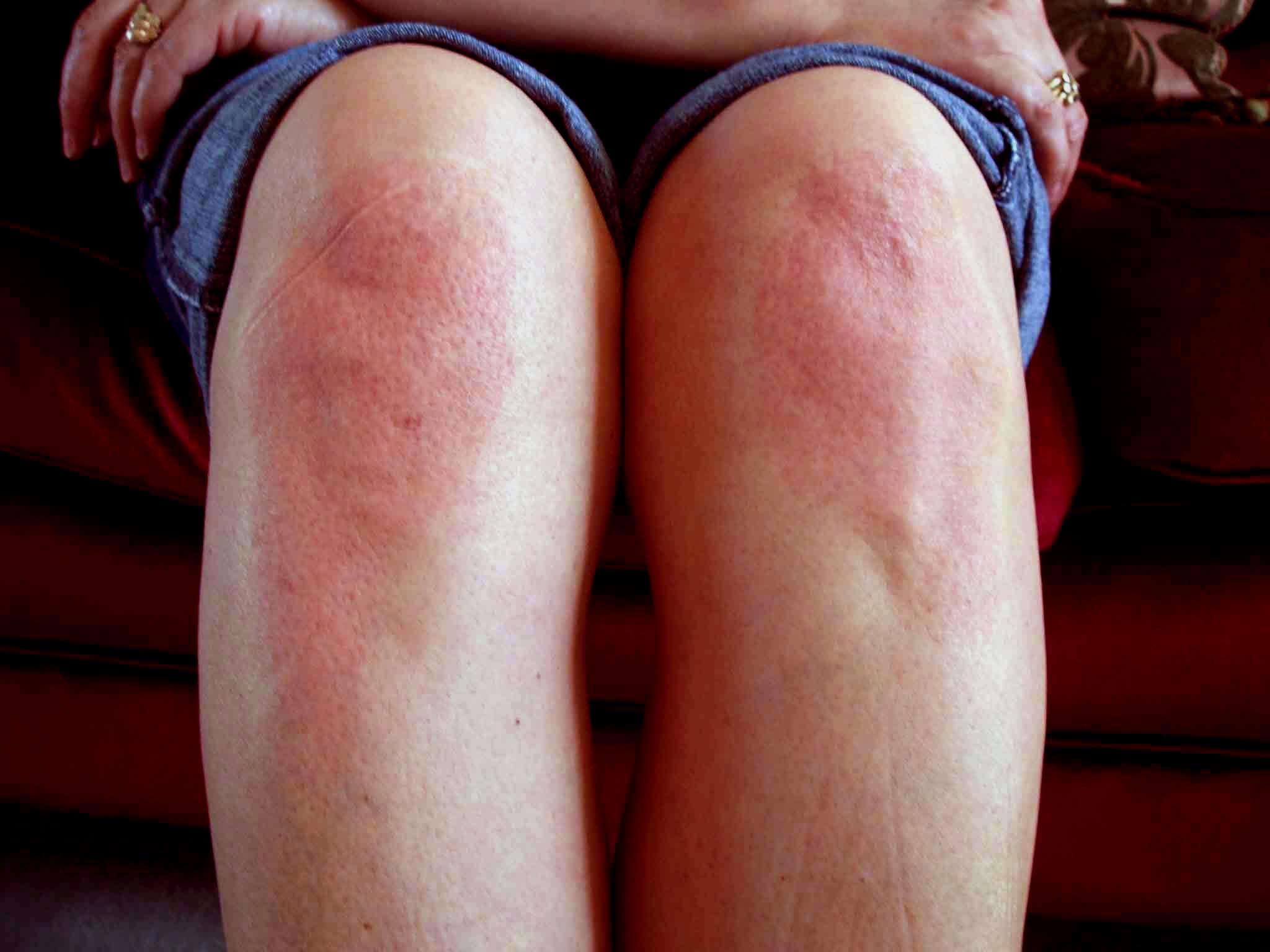
| 4. Prolonged static weight bearing through the knees creates a build up of the forces that push back into the joints from the supporting surface (ground reaction forces), increasing pressure on the joints and surrounding tissues, stressing joint structures, compromising circulation and tissue viability. (see picture below) | 4. Cushions the knees against the hard floor. The long mats provide protection and a clean kneeling surface for the entire length of the lower legs. Frequent change of position limits the amount of time that pressure is taken through either knee, thereby reducing stressing from ground reaction forces. (see picture below) … … |
| 5. Prolonged time in a static position compromises circulation thereby reducing flow of oxygen to the tissues and impeding the disposal of toxins. This quickly causes tissue fatigue, exposing them to increased risk of injury. Soft tissues become fixed, reducing their flexibility. | 5. Eliminates static positioning by enabling freedom of movement between full kneeling, half kneeling and sitting, the user being able to maintain a secure, balanced low working position throughout the task. Frequent changes of position helps maintain flexibility of soft tissues, promotes circulation and reduces the build up of pressure through the knees that results from prolonged static kneeling … |
| Picture The pink patches evidence the pressure on the knees of a teacher from 40 minutes in static kneeling whilst carrying out a low working task. |
Picture The absence of pink patches evidences the lack of pressure on the knees of the same teacher when carrying out the same 40 minute task using the ErgoKneeler™ in accordance with the guidelines. |
 |
 |